
INVITED LECTURES

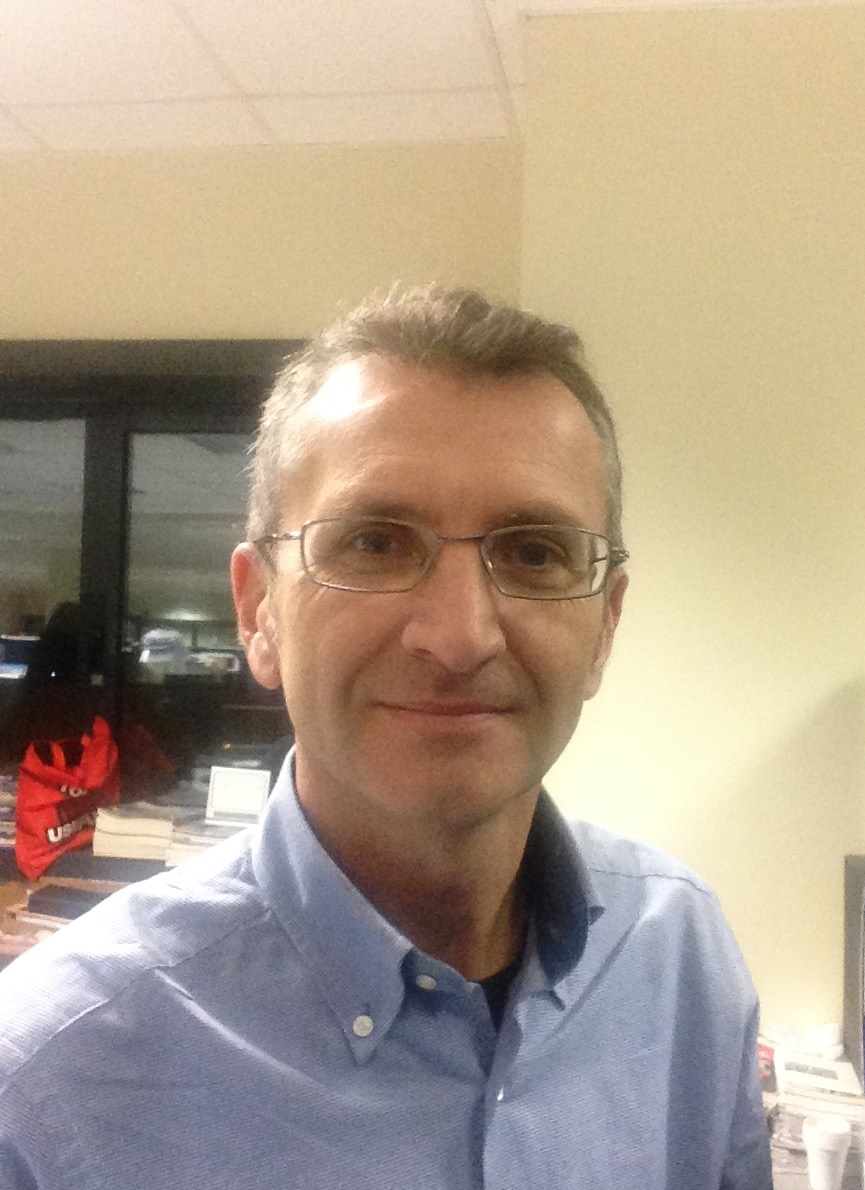
Title: Wide Band Gap Technologies for Electric Motor Drives
Prof. Giacomo Scelba
University of Catania, Italy
giacomo.scelba@unict.it
Dr. Ing. Francesco Gennaro
STMicroectronics, Italy
francesco.gennaro@st.com
Abstract: Silicon carbide (SiC) power MOSFETs and gallium nitride (GaN) FETs are becoming the go-to devices for high-power and high-efficiency electromechanical energy conversion, with switching frequencies reaching up 300 kHz for hard-switched inverters. These wide bandgap (WBG) technologies can be fully integrated to high-speed motor drives and automotive applications, in which the power converter supplies low-inductance motors requiring a high switching frequency and a high-bandwidth current regulation strategy to obtain acceptable current ripple. In the first part of the talk, a preliminary analysis on the effects of Ultra-High Switching Frequency (UHSF) PWM on the cable-motor system will be initially presented, followed by some technical solutions devoted to take full advantage of using WBG power semiconductors in Motor Drives. The second part of the talk provides an overview of the current state of the art power switches for electric drives and the roadmap for next generation devices with a special focus on the requirements for high power and high frequency operations, such as driving and package.

Title: Electricity Way for Progress in Medicine
Prof. Aleksander Sieroń M.Sc Eng.MD Dr HC multi
Medical University of Silesia in Katowice, Poland
asieron2@wp.pl
Abstract: For over 100 years the progress in medicine have been significantly demarcated by the development of knowledge on electromagnetism. Beginning from ECG, though EMG, to modern methods of imaging as MRI and CT, one can everywhere find an electric sign. Fixed in social consciousness the contribution of electricity to diagnostics is also distinctly visible in therapy. Destruction of some tissues due to ablation with the use of electric currents of various frequencies is actually recognized method of treatment, among others in cardiology and surgery. Nowadays modern applications of variable magnetic field as well as low- and high energy laser therapy bring also measurable benefit, among others in form of lowering the number of leg amputations. In my opinion the high level of knowledge in many medical disciplines would be difficult to obtain without widely understood electricity.
Title: Destructive states in the area defined as the no-damage region in the ITIC / SEMI F47 characteristics
Grzegorz Putynkowski, Krzysztof Wożny
CBRTP S.A. Research and Development Center of Technology for Industry, Warsaw, Poland
grzegorz.putynkowski@cbrtp.pl, krzysztof.wozny@cbrtp.pl
Elżbieta Szychta, Leszek Szychta
Faculty of Telecommunications, Computer Science and Electrical Engineering, Bydgoszcz University of Science and Technology, Bydgoszcz, Poland
elzbieta.szychta@utp.edu.pl, leszek.szychta@utp.edu.pl
Abstract: The spreading application of robotised systems and the technological development of converter systems that cause a number of disturbances of electric power quality give rise to the question whether their impact on the lifetime of electric receivers and their peripheries is not in excess of normative standards. The authors, in cooperation with some authorised after-sales service providers for industrial robot suppliers, have observed a rising number of after-sales complaints that remain unsolved, where the cause of robot stoppage or damage is not diagnosed. The authors believe this situation is directly caused by the fact supply voltage sags and returns to its default value are not registered (a lack of sag records) and relations are not analysed between voltage sags, current, and anomalous states of industrial robots’ automatic systems. In search for evidence of the destructive effects of voltage sags, the authors have undertaken some research and identified states destructive to electric receivers (in this case, industrial robots) in the region the ITIC / SEMI F47 curve defines as no-damage.
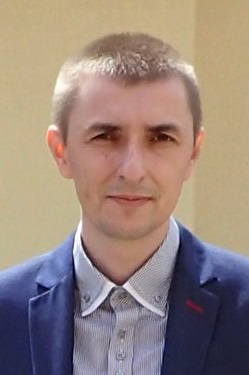
Title: Aggregation of small energy storage systems
Peter Svolik
A2B, s.r.o., Zilina, Slovakia
peter.svolik@a2b.sk
Abstract: This lecture focuses on the opportunities offered by the aggregation of small energy storage systems created by the change of operation of traditional battery based rectifier systems and their centralized control. Focusing on the existing network we are looking on additional economic benefit for the aggregator and the storage owner. One of the possibility is to use the telecom network and related BTS power systems spread over every country as a distributed energy storage system. Rethinking the way of remote monitoring changing it to complex remotely managed system offers different business models. Moreover all the appearing opportunities like renewable energy sources, second use of batteries and bidirectional converters can enrich the final solution.

Title: Advanced optical and radio communication systems to support the IT ecosystem
Milan Dado
University of Zilina, Slovakia
milan.dado@uniza.sk
Abstract: Humanity produces more than 1,000 petabytes of data each day at the present time. Approximately 90% of all the world data has been produced in just the last two years. Communication systems are the basis of almost everything that is often called IT today. In accordance with Amdahl’s law, 1 MIPS networked computing power, which is multiplied approximately twice in one year, requires 1Mbps I/O bitrate for communication. Presented will be key advanced technologies to support such requirements with optical communication networks, mobile networks through which information is transmitted, and the nanoelectronics and nanophotonic that process information. Artificial intelligence (AI) is changing the world and it’s happening faster and, in more ways than anyone ever imagined. Analyses and applications of Communication systems and networks can also be very effectively solved by the new methods of AI. The second part of the talk there will be presented practical requirements for the future development of new Optical Communication Systems and Radio Communication Systems for connecting households given in Digital compass EU 2030, which is a big challenge for all participating in systems development, creation of networks, new services, and their operation.